
Planning a podcast your team can keep producing
A sustainable podcast starts with a clear editorial purpose and a realistic account of the work each episode requires. Choose a format and release plan around the people available to prepare, produce and review it.
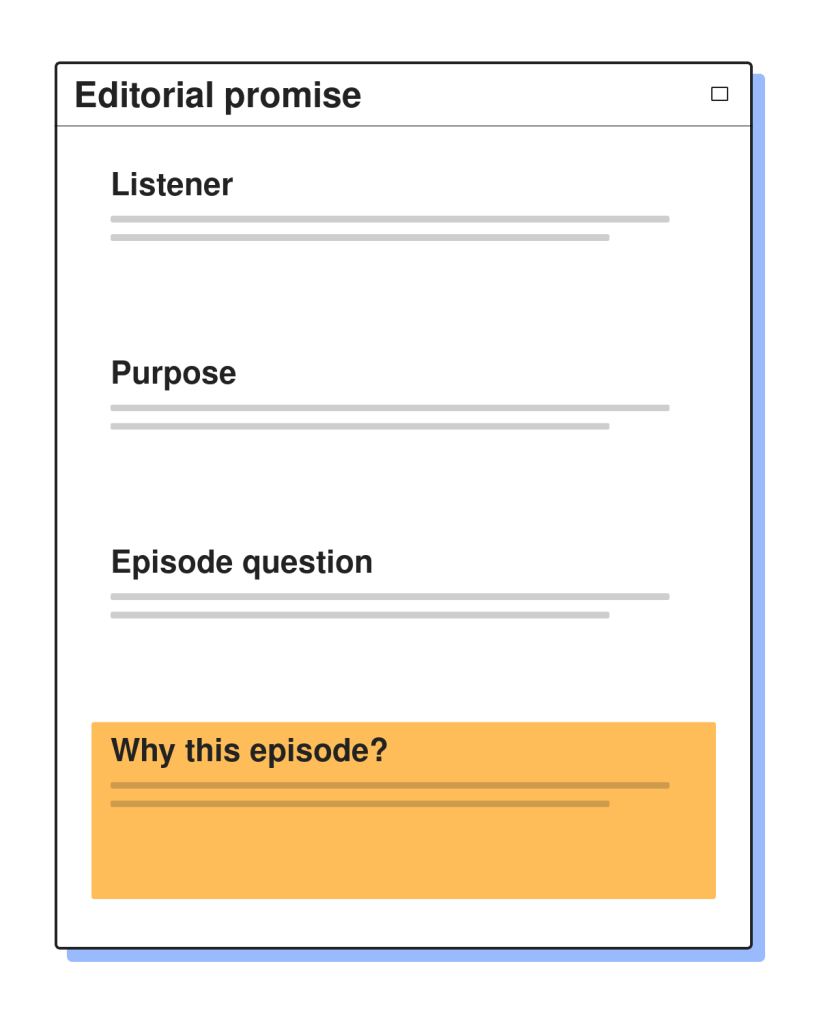
Make one promise the show can keep.
What will listeners return for? The answer might be a particular perspective, access to thoughtful conversations, or sustained attention to a subject the organization knows well.
Use that answer to judge episode ideas. A relevant guest still needs a clear assignment: why this conversation belongs in the show, what the host should explore, and what the listener should understand afterward. That editorial purpose gives the production team something specific to prepare.
Choose the format with the production in view.
An interview, a roundtable and a scripted episode ask different things of the people making them. They also create different demands for preparation, editing and review.
Consider those demands before committing to a public release schedule. A defined season can give an organization a contained editorial assignment. A continuing show needs a reliable arrangement for developing the next episode while the current one is being finished.
The useful format is one the team can produce well enough, often enough, to fulfill the organization’s purpose.
Account for the work between recording and release.
List what must happen to turn a recording into a finished episode. Depending on the show, that may include editing, factual checks, contributor review, episode descriptions, transcripts and publication preparation.
Give each part an owner and allow time for the decisions it requires. Supporting communications should have an agreed scope too. An episode can create opportunities for excerpts and other material, but each adaptation adds production and review work.
Keep editorial responsibility clear.
Someone needs to decide when a conversation needs more preparation, when an edit changes the meaning, and when a finished episode is ready to represent the organization. Technical readiness alone cannot settle those questions.
Make room for the host’s judgment, the editor’s observations and the organization’s responsibilities to contributors and listeners. Clarify who resolves disagreements so the episode can move forward with an accountable decision.
Review the commitment after a real production cycle.
Record what commanded attention, where work stalled and which parts of the format served the listener. Use that experience to adjust the next season or release plan.
The show should earn its place in the organization’s work. A production arrangement that supports its editorial purpose gives it a better chance of continuing with care.