
What does a hybrid conference production manager do?
A hybrid conference production manager coordinates the people, decisions and delivery schedule that connect the program in the room with the program experienced remotely. The assignment includes working with organizers, speakers, venues and technical teams so each knows what needs to happen and who is responsible.
Begin with what each audience is meant to experience.
“Hybrid” leaves several decisions open.
Will remote attendees watch, ask questions, join discussions or move between sessions? Will a remote presenter participate on equal terms with someone onstage? What happens during breaks?
Those choices affect the program and the production. An audience watching a stream needs a way to understand transitions and know when to return. A speaker taking remote questions needs to know how those questions will reach them. Plan those experiences while there is still time to arrange the support they require.
Give coordination an owner.
The organizer holds the event’s purpose and priorities. The venue and technical providers bring their own responsibilities. A production manager keeps the dependencies between them visible and turns program decisions into a shared delivery plan.
That can include preparing speakers, gathering technical requirements, maintaining the run of show, organizing rehearsals and coordinating cues. The role needs an agreed route to decisions: who can change the program, approve an adjustment or resolve a conflict between the room and the stream?
Name those people before the event. Otherwise, each supplier may be ready to do their part while a decision between them remains unresolved.
Rehearse the handoffs.
A rehearsal should test how people work together as well as whether equipment works. Follow a speaker from arrival through introduction, presentation, questions and departure. Include remote participation in that sequence.
Check who introduces the next session, who sees audience questions and who decides to move on when time is short. Use the rehearsal to find the gaps that a schedule alone cannot reveal, then update the working documents.
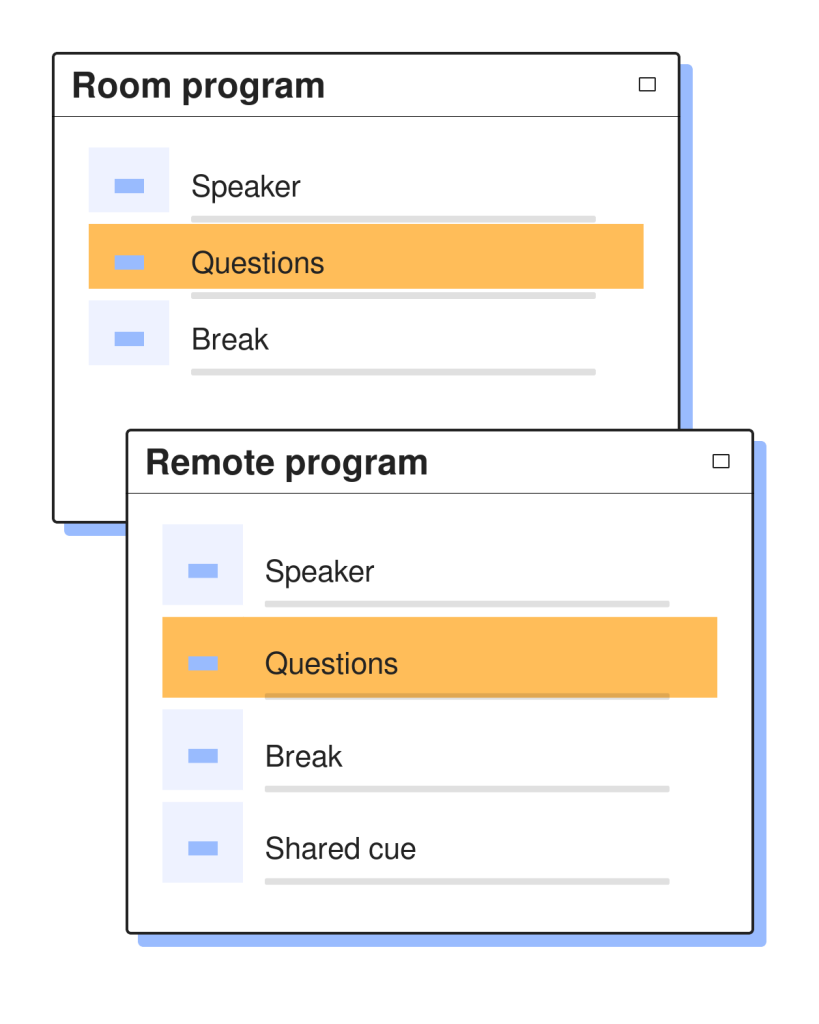
Agree on how changes will be handled.
Speakers run late. A session may need more discussion. A technical problem can require a different way to continue. Production planning should identify which decisions can be made immediately and which need the organizer’s approval.
Keep that arrangement usable under pressure. The people making changes need a shared version of the run of show and a clear way to communicate an update to those affected.
Define the assignment before comparing proposals.
State which parts of preparation and delivery need an owner, what the venue and AV teams already provide, and where the organizing team wants support. That makes it easier to assess whether a production-management proposal addresses the actual event.
For a hybrid conference, include both audience experiences in the conversation from the start.