
Use this campaign to improve the next one.
An immediate communications need can do more than fill a calendar. It can create reusable materials, clearer responsibilities, simpler approvals, and a process the team can carry forward.
↪︎ Solve the work in front of you. Leave the next assignment a better starting point.
The immediate work is the test.
Choose this campaign to set the next several up for success. A sprint invests in a space to refresh the team’s working arrangement: clarify responsibilities, simplify approvals, and build reusable templates that support future work.
The immediate work gives that arrangement a practical test. Your team leaves with reusable materials, clearer responsibilities, and a process it can carry into future campaigns, programs, and seasons.
Begin with a real assignment
A launch, season, initiative, or recurring message needs a coherent plan. The deadline and public result give the team something specific to organize around.
The immediate campaign is not an excuse to postpone better working habits. It is the place to develop and test them.
Start with intention
The process assesses your goals, audience, and key messaging. It then develops the campaign structure, core messages, reusable templates, and a practical process for producing the work.
Immediate message and campaign needs come first. Production method follows those decisions.
Build a source the team can reuse
A useful source library gathers approved information, useful stories, recurring themes, and the material future communications should draw from.
It separates what can stay useful from what needs a dated update or a fresh decision. The team has a better place to begin than the last finished post or an empty document.
Make working material, not just a plan
Representative copy and channel examples show how the direction works in practice. Reusable templates and review criteria help the team adapt that work without rebuilding its logic each time.
AI-assisted drafting and adaptation guidance can be useful. Human intention still sets the direction, gives the work substance, and determines what is ready to leave the organization.
Make responsibility visible
A handoff should show who does what, how work gets approved, and how the system will be maintained after the project.
Simpler approvals do not remove judgment. They give consequential decisions a clear place and keep ordinary work from pulling every person into every step.
Keep the arrangement active
A sprint can prepare the system. Someone still needs to keep facts current, approve sensitive material, respond to people, and adapt to what is happening.
If the principal need is daily community management, live event coverage, or continuous campaign optimization, that work should be scoped directly. A reusable process supports attention; it does not replace it.
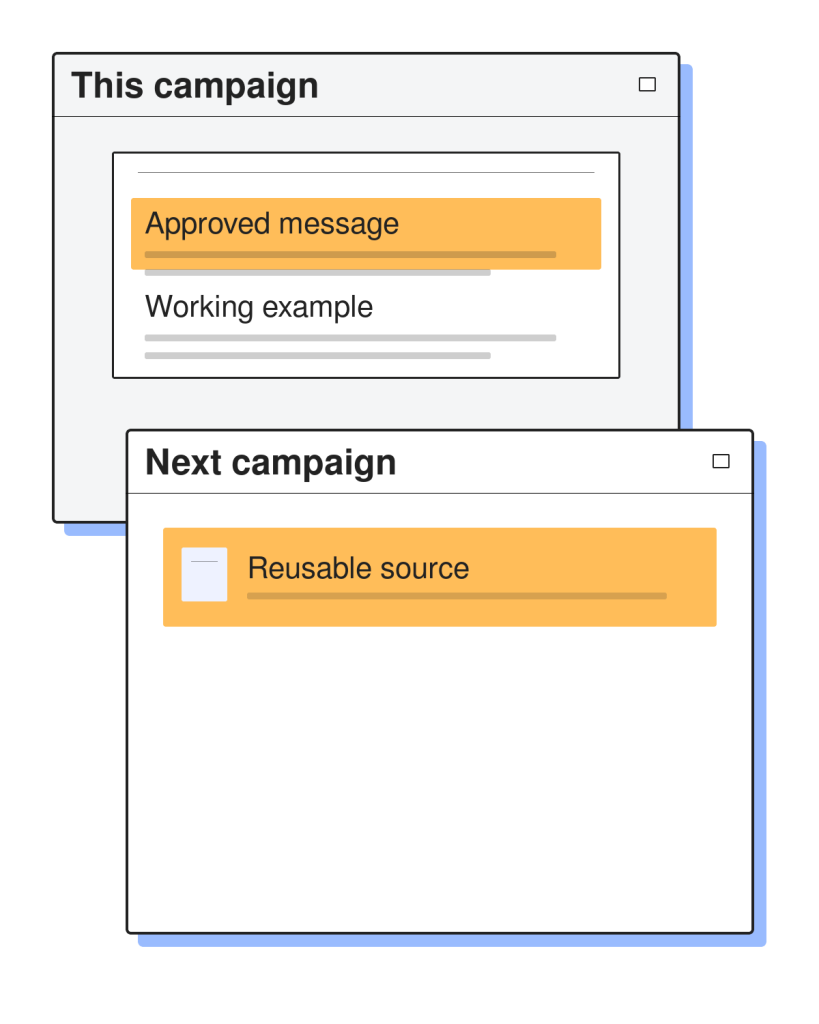
A better starting point is the useful result.
The number of finished assets, channels, and months of production can be scoped to the immediate need. The more durable result is the direction, material, and working system that lets the next communication begin with something useful already in place.
Give the next campaign a better starting point.